Tuesday, June 15, 2010

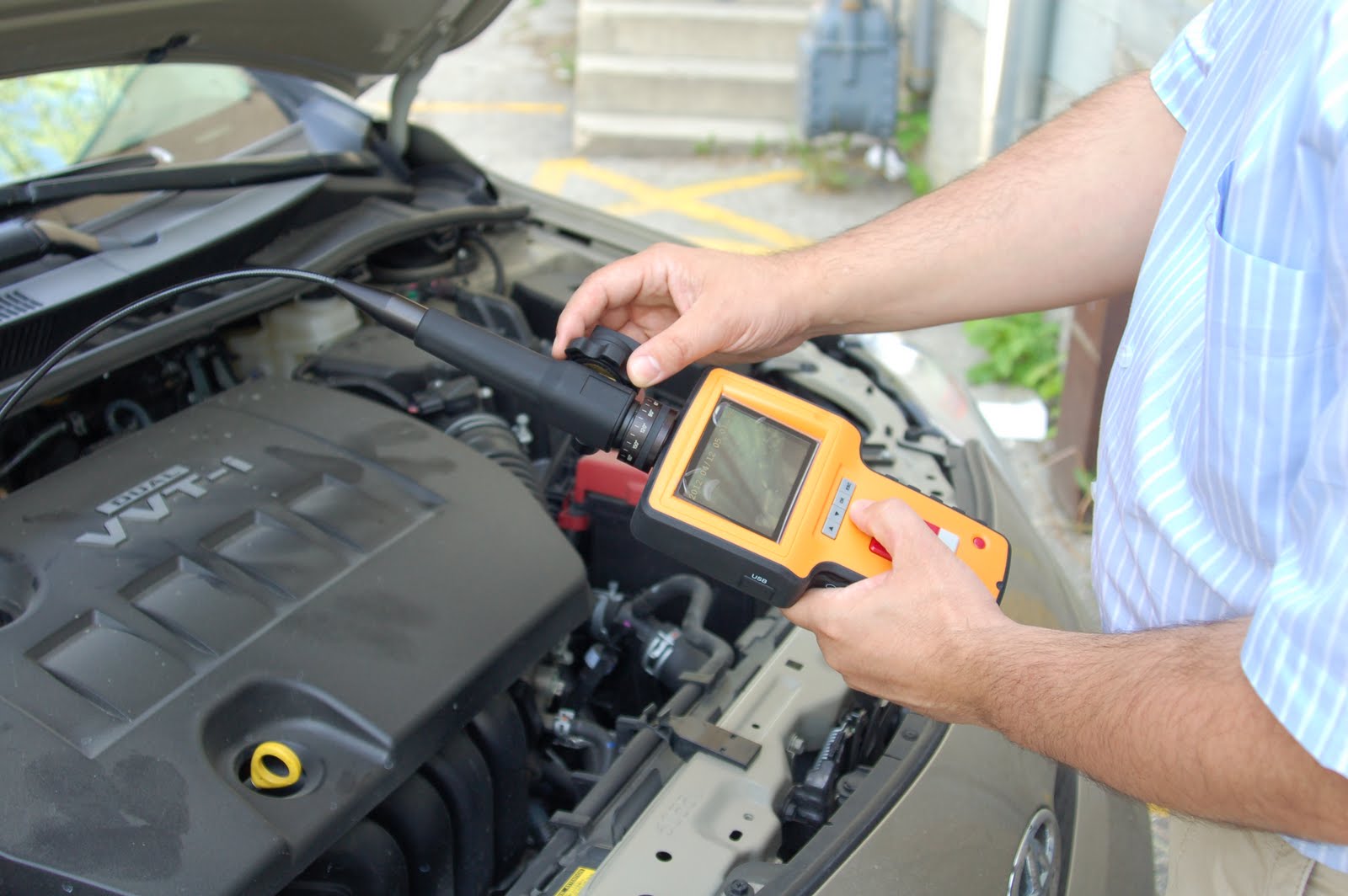
Videoscope Inspection of Car Engine

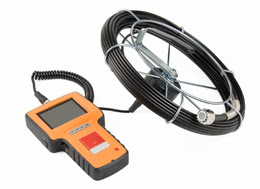
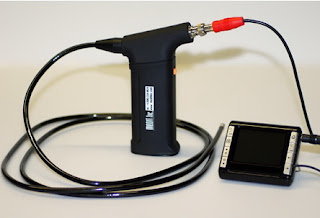
Videoscopes are great for a wide range of applications which require a small portable inspection device with the ability to articulate around corners while capturing images or video. The narrow 6mm diameter is great for accessing spark plug holes in gas or diesel engines.
Now please watch video about inspection of cylinders inside the car engine. 

Find more about such kind of videoscopes here 


Tuesday, May 25, 2010

Comparison of New LED Light Source for Borescopes with Metal Halide light source

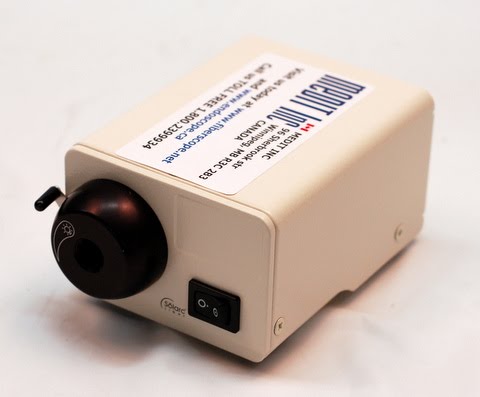
This is a compare test of 3 watt Xtreme LED Light source with 24 watt Metal Halide light source. Here it shows that Xtreme LED source give near the same light intensity as Metal Halide and give superior portability for easy and express inspections. 
Find more info HERE  


Tuesday, May 18, 2010

New Videoscope for Car Inspection


RIGEL Articulated Video Borescope
Monitor-type Articulated Video Borescope Systems by MEDIT are great for a wide range of applications which require a small portable inspection device with the ability to articulate around corners while capturing images/video. The narrow 6mm diameter is great for accessing spark plug holes in gas or diesel engines, a wide variety of pipes, and machined parts. These units also have the added ability of being able to articulate the tip 150 degrees in 2 directions, and to rotate the insertion probe in a 330 degree circle.

Please visit for more details here.

Tuesday, May 4, 2010

Borescopics – Insight in even the most remote areas

This extract is taken from the article published at http://www.lufthansa-technik.com


The complete article:

Engines are one of the most complex components of an aircraft. Some types might be big enough for a human to stand upright in the air intake, but their inside is filled up with complex technical devices hard to see and even harder to reach from the outside. To inspect or repair for example a compressor blade within the engine it sometimes takes a complete disassembly, resulting in high costs and a loss of time.
To avoid the expensive dismantling of the engine, most visual inspections at Lufthansa Technik are carried out with a so called borescope. This special inspection tool was adapted from its primary use in medical applications and consists of a thin tube containing an array of optical lenses. It can be inserted deep into the cavity of an engine part to be inspected. The optical array is surrounded by a fiber-optic that transports light from a connected source directly to the area of inspection. From there the light is reflected back, and through the optical array it pictures the image of the examined area directly in the operator’s eye or a camera attached to the borescope. This function allows the qualified personnel of Lufthansa Technik to gain an incomparable insight in hidden structures normally invisible without disassembly of the engine.
For examination with a borescope, aircraft engines are equipped with numerous sealable notches which provide access to all different sections, from the combustion chamber to every single compressor stage. For the latter, only one aperture per stage is needed, because all blades can easily be rotated into position before examining them with the borescopics equipment. For fixed components, which are not accessible in a direct line, Lufthansa Technik uses a special type of borescope, the so called flexoscope. Instead of lenses it uses a glass fibre optic within a bendable hose. With several meters in length it allows the operators to access even those parts that can not be turned into position.

Friday, April 23, 2010

Economical Portable Flexible Borescope

Portable flexible fiberscope fast facts:

  • Inspect and explore inaccessible areas using one-hand operation.
  • Clearly focus on objects as close as 1.2 inch to 15 inch away.
  • Mirror adapter 70, 90, 120° view for various angled viewing add even more inspection value.
Features:

low cost borescope
  • Integrated focus ring for smooth, continuous focusing
  • 920mm or 460 mm long insertion tube will reach deep into walls, drains, vents, engine blocks, etc. and requires only a 4mm opening
  • Flexible, cable bends in every direction to allow precise viewing
  • Durable insertion tube is both rugged, water and oil resistant, allowing you to get in the most difficult places.
  • Convenient, adjustable eyepiece Super Bright Xenon lamp illuminates dark locations for clear viewing
  • Rugged ALUMINIUM carrying case, sealed lens and cable are submersible for underwater use
  • Operates on 2 AA batteries
Applications:

  • Checking blocked air conditioner evaporator coils
  • Examining heat exchangers
  • Feeding thermostat wires
  • Insect and rodent inspection
  • Building and houses inspection
  • Checking for ductwork clearance
  • Verifying duct integrity during installations and renovations
  • Automotive
  • Aircraft
  • Safe and locksmiths
For more info please visit

Tuesday, April 20, 2010

Here are some parts of article "APPLICATIONS OF OPTICAL DEVICE DURING MAINTENANCE OF AIRCRAFT" Mohammed Mahi Uddin Khan Biman Bangladesh Airlines

During aircraft maintenance ‘Optical technique’ is contributing a significant role to detect discontinuities on aircraft structure, components and installed engine. With the minimum part preparation this technique has proven the most effective nondestructive method in aerospace industry.
Optical instruments are widely accepted during aircraft maintenance, mainly for two reasons i) to magnify discontinuities that can not be detected by the naked eye and ii) to permit visual checks of critical areas not accessible to unaided eye and difficult for other nondestructive tests.
Several types of optical instruments are used during the specific ‘optical inspection’ technique. These are, magnifying lenses, borescopes, micro borescopes, flexible fiber optic borescopes, microelectronic video borescopes & diffracted light etc.
Magnifying devices and lighting aids are used to detect general area for cleanliness, presence of foreign objects, security of the component, corrosion and cracks or other damages.
In maintenance program Borescope inspections are reducing or eliminating the need for costly teardowns.
In this paper details description of ‘various optical devices’ and their application techniques in different areas of aircraft structure and engines will be highlighted.
Introduction: The human eye is an important element for performing visual nondestructive tests. But in many cases the human eye is not sensitive enough or cannot access the test site. As a part of maintenance program and to ensure the safety and structural integrity of aircraft, ‘Optically aided visual methods’ are frequently used, where access is poor for other nondestructive tests. Such tests includes the magnifiers and borescopes
Devices for viewing the interior of objects are called endoscopes, from the Greek words for ‘ inside view’. Industrial endoscopes are called borescopes because they are generally used in machined apertures and holes.
Probably in1946, an ultraviolet light borescope was developed for fluorescent testing of the
interior of hollow steel propeller blades of aircraft engine. The 100W-viewing instrument detected interior surface discontinuities as glowing green lines. Later in 1958 the USAF B-47 Bomber fleet was grounded because of metal fatigue cracks resulting from low-level simulated bombing missions. Visual testing with borescopes was proved the effective method for the first step to resolve the problem. In 1950s, a system was developed for automatic testing of helicopter blades. The borescope supported by long bench could test the blades while the operator viewed results on a television screen.
In 1960s Mr. Lang developed the radiation optics in a project to keep functional the borescope system in high temperature environment. He also pioneers the use of closed circuit television with borescopes for testing the inner parts of jet engines and wings, hollow helicopter blades and nuclear reactors. In 1965 a borescope was invented whose mirror could precisely controlled and this borescope could zoom to high magnification and could intensely illuminate the walls of chamber by means of a quartz incandescent lamp containing iodine vapor.
Since then various optical devices are using during aircraft maintenance.

You can find and shop for more devices using for aircraft maintenance here 
Wednesday, April 14, 2010

Push Camera for Pipe Inspection

What is a push camera?
These inspection cameras consist of a long insertion probe with a flexible "goose-neck" for getting around corners.
Push cameras are used for pipeline, pipes inspection in plumber, repair of inspection work. LED lights give adequate illumination and camera on the tip capture clear images and allow image and video saving.
You can see an example of a nice pipe camera. The 26mm (1”) diameter is great to inspect wider pipes, machinery or castings, ducts, wells, or disposal areas, and industrial lines. The live color image is provided by a ¼” CMOS video camera chip in the tip. Illumination comes from 12 LED lights positioned around the camera chip protected by a solid steel head. Live images are displayed on the portable monitor.
You can review more features of this pipe camera here.

Monday, February 15, 2010

Choice of Light Source for Borescope Inspection


Metal halide lamps, a member of the high-intensity discharge (HID) family of lamps, produce high light output for their size, making them a compact, powerful, and efficient light source.
Illumination of areas under inspection is very important. Here is the choice between halogen, xenon, metal halide and LED lighting. Each light source technology has its advantages and disadvantages. 


A halogen lamp is an incandescent lamp in that is affordable but produces yellowish light.
A Xenon lamp is another type of lamp that produces a vivid white light with a high color temperature and volume but is large and heavy.


LED lighting is becoming more popular as the technology improves its ability to produce sufficient light. 


If you need portability and small size of light source you may pay attention to LED powered videoscopes while when you require to inspect large gas turbines you would prefer a videoscope powered by a metal halide lamp. 

If you're looking for a convenient borescope light source you can find a good selection at Fiberscope.net light source category page.

Wednesday, January 27, 2010

Super Thin Fiberscopes Inspect the Smallest Areas

Super thin fiberscopes are used to remotely inspect the smallest areas. 
Sometimes applications require access through the smallest holes less than 1.0 mm. Typically these super thin borescopes are limited in length and direction of view is forward.
These small inspection areas provide remote visual inspection professionals with many challenges. The access dictates the inspection requirements more than any other factor. The smaller the inspection area the more limited the choice of borescopes available and the number of manufacturers of these micro borescopes.


Applications for Micro Borescopes:


• Engineering  Manufacturing. Super thin Fiberscopes provide cost-effective examination of internal structures without tear down.


MEDIT's Micro Borescope• Quality Control. Super thin Borescope instruments allow manufactures to inspect components for defects. Mini borescopes provide the ability to inspect internal components, bore holes, castings and other manufactured items such as turbine blades, automotive components, circuit boards, rifle barrels and welds.


• Castings. Super thin Fiberscopes can be used to inspect inside casting of engine blocks and other high quality casted components.

At Fiberscope.net you can find a full range of micro borescopes for remote visual inspections.

Thursday, January 21, 2010

LED light sources for Endoscopes


LED light source with a borescope

No wonder today innovations touch every area of our life.  
The best and most useful discoveries are devoted to cure and save people. LED light sources stand out of this long list. What can be more familiar to us than a usual bulb? For decades we have used simple electric bulbs, but now they are rapidly being substituted by new LED bulbs.
What is a LED? LED – light-emitting diode – consists of a semiconductor diode. LED was discovered yet in 1927 by Russian scientist Losev, but enjoyed its practical application only in 1962, when the production of red light emitting diodes launched. One of the first LED indicators was used in calculators in 1968.

Gradually LED light sources penetrated into many spheres of industry and medicine.  Scientists developed new very bright light sources based on super efficient  LED bulbs, which at a higher current emit thousands of lumens. Now we can say that LED light sources have more advantages than any other, including Halogen or Metal Halide light sources. 

LEDs produce more light per watt than other bulbs. Just with the help of 3V battery you can receive power of a good multiwatt bulky Halogen light source.

LED light source for borescopeLEDs can emit light of an intended color without the use of color filters. Now LED handles for endoscopy emit a very powerful white light. This light is “cleaner” and “whiter” than Halogen and stands near Xenon light sources, which helps at the most complex operations.

LEDs can be very small (smaller than 2 mm). Based on this feature LED light sources (or LED handles) become more and more compact. Their weight is getting less. Everything is handy. You can easily take it and adjust light intensity and focus just with a slight touch of finger!
LEDs light up very quickly. You don’t need to wait long for the efficient work. The brightest light starts emitting in microseconds, and often these very microseconds can be decisive.
LEDs can very easily be dimmed either by modulation or lowering the forward current. Now LED light sources get a light intensity switch to decrease or increase illumination easily.
In contrast to most light sources, LEDs radiate very little heat in the form that can cause damage to sensitive objects or tissues. Wasted energy is dispersed as heat through the base of the LED. 
LEDs can have a long useful life. One report estimates 35,000 to 50,000 hours of useful life, though time to complete failure may be much longer.
LEDs, being solid state components, are difficult to damage with external shock.
The solid package of the LED can be designed to focus its light. Incandescent and fluorescent sources often require an external reflector to collect light and direct it in a usable manner. This feature results in LED light sources with adjustable focus. This helps to illuminate either a large are of inspection, or to concentrate on a small spot.
The development of LED technology has caused their efficiency and light output to increase exponentially, with a doubling occurring about every 36 months since the 1960s, in a way similar to Moore's law.  Soon LEDs will completely substitute all the other light sources.
To see MEDIT's range of Borescope LED Light Sources, please go here

Tuesday, January 19, 2010

Does My Borescope Need a Camera?

ImagePRO TV borescope camera
Optical borescopes and fiberscopes can record video with the help of a CCD camera. The CCD camera is attached to the eye piece of the borescope with a C-mount video coupler. You get a very convenient device - both for optical (eye) inspection or to view the video on a TV monitor.
Sony CCD borescope camera
Various adapters can transform analog signal to digital. They are so called Image Capturing devices or boxes. With the help of such a set - Fiberscope + CCD Camera with a coupler + USB Capturing device - Inspections can be viewed and recorded on a laptop.

For more information about borescope cameras see this page, or please email me.

Tuesday, January 12, 2010

Borescope Application at Power Plants

During maintenance works at Electric Power Plants borescopes sand videoscopes are used to reduce maintenance costs and avoid outages. Videoscopes can be used in the following areas:
  • Steam and gas turbines - turbines are checked for foreign object damage, erosion, burning and cracking. Combustion chambers are inspected for cracks, combustion deposits and burning. Turbine section nozzles and blades are checked for cracks and erosion.
  • Heat Exchangers - cooling tubes are checked for scale deposits, corrosion and cracking.
  • Boilers are remotely inspected with long videoscopes. 

For more information on videoscopes using at power plants go here, or email me

Wednesday, January 6, 2010

Borescope LED Light Source - New and Innovative

LED Light source for borescopeAs a skilled professional looking for the best tools for remote visual inspections, the Xtreme LED is exactly what you need. Essential improvements include - portability, as there are no cords to plug in unlike metal halide light sources, increased illumination with 50,000 Lux, higher then any other 3W light sources and bright enough to use with most flexible fiberscopes.

Borescope light source with a chargerProfessionals often meet situations when the weight of equipment is vitally important. The Xtreme LED light source is the best solution at such complex tasks, as high-altitude works, field works, areas without electricity and others.

The Xtreme light source can be widely used under severe climate conditions, where other light sources cannot be operated. One of the most important features of the Xtreme LED light source is a very durable LED bulb with practically endless resource (over 1,000,000 hours of lamp life per bulb) unlike HID or Halogen bulbs.

For more info and FREE brochure please email me, or go to light source category page of Fiberscope.net

Monday, January 4, 2010

Borescope Field of View - What? Why? How?

Borescope field of view
It is important to understand some terms when choosing the right inspection tool - borescope. The field of view (FOV) is the angular extent of the observable inspection area that is seen at any given moment. Borescopes, fiberscopes, videoscopes and other remote visual inspection equipment should all list field of view in their specifications.
A wide field of view allows conducting a turbine inspection to complete each section in one pass while a narrow field of view may require the inspector to inspect the same section of turbine blades twice and take more time to conduct the inspection.
It is also worth attention to evaluate how a different field of view affects the depth of field (the distance from the target a clear image can still be seen). Typically, the wider the field of view a borescope has, the shorter the depth of field.
See more information about borescopes at Fiberscope.net industrial store

Tuesday, December 29, 2009

Videoscope Inspection of Oil Field Pumps

Oil field pumps operate in some of the most rigorous industrial environments. Periodic remote visual inspection helps to ensure that these pumps are functioning properly. An oil field pump that is not functioning properly will not operate efficiently and cost money.

A Videoscope is the most preferred method of inspecting these pumps for corrosion, cracking, obstruction and overall system integrity. A Videoscope is easily inserted into an access of 3 cm and pushed to 3-5 meters to inspect the interior condition of the oil field pump.

Please email me for more info, or go to this page to find more about borescopes using in oil and gas industry.

Thursday, December 24, 2009

Videoscopes to Study Turbine Fuel Nozzles

Videoscopes can be used to inspect large gas turbine components such as fuel nozzles. The efficiency and proper working of a gas turbine depends on such components as fuel nozzles. 
Videoscope with a small diameter of probe, such as 4.0 mm, will easily access the twists and turns in the tight spaces of these fuel nozzles. The videoscope should be able to twist with the assistance of the scopes articulation.
For more information please email me, or go to this page about videoscopes for turbine inspections.

Tuesday, December 22, 2009

Borescope for Bridges

Steel and concrete structures are subject to corrosion and fatigue. Specialists can use industrial video scopes  or video borescopes to inspect inside voids, cavities and other hard-to-reach areas to determine the condition of a bridge.
Borescope inspection of bridges—a videoscope or Video borescope is typically used to evaluate the condition of areas difficult to access for visual inspection. These tools can transmit images from a video scope camera attached to the tip of a thin flexible tube that can be as long as 30 meters. 
Common applications in bridge evaluation include bearing inspection and tendon inspection. Remote visual inspection access can be through existing holes or cracks or small holes drilled into the structure.
Click here to see some of the most popular industrial borescopes convenient for bridges inspections. 

Wednesday, December 16, 2009

Borescope Inspection Applications on Commercial Ships

Borescopes and videoscopes are used to remotely inspect a variety of internal areas on large commercial ships. These ships range from large yachts to and oil tankers. Borescopes are to ensure that the ship is in good condition.

Borescope and Videoscope  Applications include:
  • Diesel Engines and Turbines. Borescope inspections of engines and turbines on commercial ships is essential to ensure that the power plants are functioning properly and can continue to safely operate without unnecessary maintenance.
  • Grey water lines. Commercial ships need to inspect long lengths of gray water lines using long push or pipe inspection cameras. The ship board pipes can be checked for corrosion, pitting and prevent potential problems.
  • Bulkheads and confined spaces. A large commercial ship or cruise line is filled with tightly confined spaces that need to be periodically checked for condition. Videoscope can easily access the smallest areas to check for corrosion and other defects.
Feel free to email me, or go to videoscope directory of Fiberscope.net to learn more. 

Tuesday, December 15, 2009

Borescope for Automobile

Visual Inspection has many applications in the automotive industry. You can use borescopes and videoscopes to inspect internals engine castings, cylinder bores, gearboxes, body shells and finished vehicles. You can study many various problems without teardown with an automotive borescope including finding sources of unwanted noise and checking internal component condition for carbon deposits and wear, identifying corrosion and confirming component failure. Borescopes can be used cost-effectively in automotive applications. Automotive Applications include:

  • Engine - valve damage, cylinder inspection, head gaskets and piston top
  • Clutch - condition and thickness of lining – condition of springs of pressure plate and thrust bearing
  • Transmission and differential – ring, bevel gear inspection – seals and shaft bearing inspection
  • Body and Chassis – inspection of hollow members to detect cracks and corrosion

You can learn more about use of borescopes in automotive inspection

Thursday, December 10, 2009

Wireless Video Borescope

wireless video scope
Wireless Video Borescope Systems are great for a wide range of applications where a small portable inspection device is required to capture images and video. The video borescopes are great for accessing spark plug holes or inspecting industrial equipment. The ability to place the monitor in a convenient location and proceed with more specialized inspections is a great addition too.
Now you can place the monitor separately at any convenient place! Besides each wireless videoscope is supplied now with three mirrors for different angle of view.
You can find out more about Wireless videoscope here

Sunday, November 29, 2009

Wireless Video Borescope

Please watch this video about the basics of Videoscope with Wireless monitor


Go to Fiberscope.net to learn more about this and other wireless video borescopes  

Tuesday, August 4, 2009

Video about MVBS videoscopes

Here is interesting video about quite versatile and not expensive MVBS videoscope which is available at fiberscope.net


Friday, July 31, 2009

New Xtreme Light Source for All Borescopes

LED Light source for borescopes
Portable Xtreme LED light sources are a convenient, easy to use, substitute for bulky halogen or metal halide light sources. These Xtreme light sources feature a high intensity 3W LED, which produces well over 50,000 Lux of illumination, and an adjustable intensity control lever, to vary the illumination for different inspection areas, or areas with reflective surfaces.
These portable LEDs work with flexible and rigid endoscopes/ borescopes, and some flexible fiberscopes too. They produce a focused bright white light, not an unfocused yellow light like some halogen light sources. Power is provided by a rechargeable lithium ion battery, and at full power these units will run continuously for 45 minutes. Charging takes 2 hours, but the LED should be good for over 1,000,000 hours of lamp life per bulb.
To see and shop this as well as a range of similar borescope light sources, go to this page 


Monday, July 13, 2009

Active Scope (Videoscope) camera

I found an interesting video. This is about a kind of a mixture of a snake and a camera. This videoscope is designed to penetrate through complex debris. Please watch how well it can be directed, like a real snake!

Friday, July 10, 2009

Borescope Inspection of Rifle Barrel

This time I would like to show you the process of rifle barrel inspection. This is done with the help of a videoscope. The videoscope consists of a monitor, insertion probe with the camera and light source in the tip. It provides a good image and many other functions, like recording, transferring of live video and images etc.
To learn more about borescopes using for barrel inspection click here 

Saturday, July 5, 2008

Most Flexible Fiberscopes

Fiberscope by Medit
I would like to tell you about flexible borescopes, which offer a bright and clear analog image of the inspection area. These Fiberscopes are designed with an ergonomic hand piece, a flexible insertion tube and a detachable light cable.You can choose between 12,000 or 20,000 glass fiber optic pixels. The insertion tube is made of a resin coated braided steel. It is water and oil proof. The fiberscopes have 70 degrees field of view, 2 or 4 way tip articulation with a minimum of 90 degrees in each direction and a focusable eyepiece. All Fiberscopes are supplied with a removable portable LED light handle and a carrying case for safe transportation.
These scopes can be used in Aviation and Automotive Maintenance, Industrial Machinery, Building Inspections, Search and Rescue Operations, Customs and Police Inspections, Oil and Gas Industry. Fiberscopes provide a clear image of areas, which are normally impossible to inspect.

Monday, June 2, 2008

USB Videoscopes: New and Better


This time you can see a successful addtion to existing USB video borescopes. Now there are two more models with insertion tubes with diameter 9 mm (0.354'') and length of 91 and 150 cm (36'' - 59'').
NEW industrial Flexible USB Video Borescope (videoscope) is a whole new innovation that we use in digital image transfer instead of transferring analog image through optical fiber.
The way of transferring image in this Flexible USB Video Borescope is quite different with the traditional optical fiber endoscope technology.
Flexible USB Video Borescope (videoscope) can provide not only higher image resolution than normal fiberscope but also can take still picture and record video for user needs. It is the total solution for replacing traditional industrial fiberscope.
You can find more details here 

Monday, March 17, 2008

Every Borescope Needs This MEDIT Camera

Borescope Camera from Medit


Please pay attention to this beautiful High Resolution, Video Endoscopy Camera for all kinds of endoscopes, borescopes, fiberscopes.
It has universal eyepiece connection and is equipped with focusable optical coupler for connecting it to eyepiece of your endoscope/borescopes.
Camera has easy set up and connection. Simply connect to 12 volt power adapter (included) and connect RCA connection to your TV, TV-monitor or video monitor.
Connect your scope to the coupler and start using our improved video camera for scopes right away!

You can view and purchase this videocamera here

Sunday, February 17, 2008

New Light Source for All Borescopes

LED light source for borescope
Medit Inc. presents a new 3W superbright powerful light source for any type of borescopes and fiberscopes.
Medit Inc.’s Portable Superbright LED Light Sources are a convenient alternative to bulky Halogen and Metal Halide light sources, or unfocused LED light handles. Our LED light sources feature a convenient design, high intensity illumination, and low price. They combine reliability with durability by offering a low power 3W LED element, with a specially designed super-magnifying lens. This design allows for ample illumination, on average 28,000-46,000LuX, with low power consumption (3 AAA batteries for 2.5 hours of continuous illumination), and over 1,000,000 hours of lamp life per LED light source.

In addition to the outstanding illumination and low power consumption our LED light sources are available with either an ACMI or STORZ threading. This allows you to use them with a wide variety of medical, veterinary, and industrial endoscopes, fiberscopes, and borescopes, for quick and simple inspections, or in the field. It also makes our LED light source a better choice than many of the higher Watt Light Sources on the market today.

Discover the World of Medit LED Light Sources here!

Wednesday, January 30, 2008

‘Miniature Landscapes’ - Fungal art at its best (Borescope Pictures)


On the way home from work today, I stopped by the new gallery in Mann Library for the opening of Miniature Landscapes, an extraordinary exhibit by Kent Loeffler, one of three photographers who have served the Department of Plant Pathology at Cornell over the last century, and Kathie Hodge, a faculty member in that department who blogs at the Cornell Mushroom Blog.
Kent is a treasure and one of the nicest guys you’ll ever meet. He toils all day shooting diseased leaves and other mundane subjects. But he’s a great artist and photographer who is as quick to share his expertise as he is to share his smile. If you’re in the neighborhood, you owe it to yourself to view these photos.
Marasmius rotula borescope photo by Kent LoefflerKent used a borescope to get right down into the the world of fungi. He describes it as “a bit like having a fisheye lens on the end of a stick.” You can see more examples of this technique and some of the technical details at his photo lab website. Kathie’s equally fascinating videos of growing fungi and decaying fruit are running on continuous loops on retro Macs in the center of the exhibit.
Some of my favorite work of Kent’s, though, are at the other end of the spectrum — his panoramas. (You can drag yourself around Minns Garden outside my office 360 degrees.) Many have graced the cornell.edu homepage and some 6-foot-long prints of his decorate the halls of the office where my wife works in Collegetown.
Many of Kent’s works are online, but scattered all over like the spores he’s often called on to shoot. Check out these:
  • Plant Path Photo Lab website with linke to still, panoramas, time-lapse movies and some other very interesting techniques. (Check out his digital photography and PhotoShop tips.)
  • Plant Pathology Photos rescued from the old ExploreCornell site. Interesting historical stuff along with Kent’s work.
  • Ithaca 360 features more of Kent’s 360-degree panoramas from the Ithaca area.
Interesting note: If you google image search Kent’s name, you don’t get his great art. But you do get a great image we comissioned Kent to do of viburnum leaf beetle larva for our viburnum leaf beetle website.
Now what excuse can I think up to borrow Kent’s borescope?

Ceratiomyxa fruticulosa borescope photo by Kent Loeffler

You can find a wide selection of borescope for science researches at Fiberscope.net industrial store.

Sunday, January 27, 2008

Portable Monitor Type Flexible Borescope

Video Borescope ORION


Medit Inc. presents a new revolutionary unit, which offers operators a video image of the inspection area.
Often we need portable devices for inspection needs. With the help of a new Portable Monitor Type Flexible Borescope you can discover new possibilities to inspect areas. This Borescope is equipped with a powerful LED Light Source, 3.5” TFT display screen, internal CMOS camera chip in the tip. It is able to capture images and video. Though it is quite compact, this Borescope can perform all types of remote visual inspections, similar to any traditional industrial Borescope. Its working length 1 - 30 m, diameter of probe 5.5 mm. You can change videoprobes. A bright TFT monitor allows better communicating and understanding when discussing with your clients about the inspections.
The unit’s 5.5mm outer diameter can easily access small spaces including the spark plug holes of gasoline or diesel engines. The extra-wide angle camera takes pictures up to 640x480 resolution. You can save pictures and video of your inspection areas to SD card.
Discover the World of Medit Borescopes, Fiberscopes and Videoscopes!

Thursday, January 24, 2008

Borescope, Connectable to PC – Nice Solution

usb inspection camera
Medit, Inc. continues to offer the best solutions for your inspection needs. Today Medit presents a new Portable USB Video Borescope.
This new industrial Flexible USB Inspection Camera is a whole new innovation. Instead of transferring analog image via optical fiber this device utilizes digital image transfer. This new USB Video Borescope provides higher image resolution than normal fiberscope. This Video Borescope can take still pictures and record video. You can easily connect this Borescope to your PC and watch an enlarged view of the inspected area.
The sphere of its application is giant. This Flexible USB Video Borescope suits perfectly to Aircraft, Marine, Locksmiths, Auto-Repair or any other industries that would require storing individual database for clients. It is very convenient to inspect whatever you need with the help of this Inspection Camera. It is the total solution for replacing traditional industrial fiberscope.
Among its characteristics we only mention its insertion tube length 36" (91 mm) and only 10 mm in outer diameter. The resolution is 400,000 pixel, which is enough for any kind of inspection needs. Each unit is packed in an aluminum case, including USB cable and CD driver.
Discover the World of Medit Borescopes, Fiberscopes and Videoscopes!

Wednesday, January 2, 2008

Borescopes - all you need to know

Have you ever heard of a borescope? Chances are you've seen them, even if you didn't know what they were called. For example, have you ever seen an engine mechanic using a small-diameter tube, with an eyepiece on the end? In any position the thin, sometimes flexible tube, in strategic locations helps them to get a good look at what is going on inside. These are borescopes.

As you might have guessed, borescopes are commonly used when inspecting machinery. For example, HVAC professionals use rigid borescopes, which have a straight-line barrel, to inspect air conditioning and heat pump components. The advantage of using a borescope is that it often eliminates the need to completely disassemble a machine in order inspect it.

How do borescopes work? Rigid borescopes, which do not bend, utilize a series of positioned optical lenses to transmit light. There are video borescopes as well, which incorporate the latest video display technology.

On the other hand, borescopes which flex, or bend, utilize a different type of technology -- fiber optics. The fiber-optic filaments used in flexible borescopes allow these models to be bent and moved -- and this is really helpful when various obstacles in the way would prevent the use of rigid borescopes. ProVision borescopes are relatively inexpensive, flexible borescopes which are widely used by mechanics in the automotive field, as well as in other fields.

It is also possible to purchase various types of borescope accessories -- for example, if you will need to use your borescope in the field, you can purchase a battery operated light source for it. You can also purchase specially-designed carrying cases, changeable diameter shafts, couplers for the connection of a camera, etc. At the Fiberscope.net specialized online store you can find a wide range of borescopes to choose from.

And since borescopes can cost thousands of dollars to purchase new, it is also possible to rent them. Borescope rental companies have sprung up, and they provide a very important service for businesses who could not otherwise afford to purchase a borescope -- or for businesses or industries who only have an occasional need to use one. Borescope rental fees are extremely reasonable, and most borescope rental companies have a wide variety of models to choose from. You can rent a borescope from the Fiberscope.net too.

An important borescope advance is the development of specialized, PC-based software applications. These specialized programs will allow you to do things like digitally record images, to document your inspections, operate your borescope from a remote location -- some of them will even help you to do your paperwork! Some companies will offer these computerized applications along with your equipment purchase, eliminating the need for an additional, expensive purchase.

Friday, December 21, 2007

Endoscopic Web Cam and Skype

I'd like to share one wonderful news that I read recently.
One man from Skype Journal offers one of the cleverest ideas for using Skype. In short he suggests hooking up a type of a digital pen camera (endoscopic camera). The device would be able to show finely detailed objects within Skype video sessions. For example, you are selling coins on eBay. Using your Endoscope, you would be able to pan over the surface of the coin, and present it to prospective buyers in a high-resolution that would be real-time rather than a series of high-res stills that simply evoke more questions from your would-be buyer.

Wednesday, December 12, 2007

Portable Videoscope Becomes Widely Available

Medit Inc is very glad to present its new Portable Video Borescope. 
This Portable Video Borescope is a nice solution if you need a good videoscope but not ready to pay $15,000 - $60,000 for a complete videoscope. This new borescope is designed to provide a low cost video inspection of hard-to-reach areas.
The set includes the Video Borescope with a LED light handle, RCA cable and a portable video capturing device. You can connect the borescope directly to TV monitor or use it with the portable video device. No secret how it is important to get a bright clear image of areas under inspection. A live video image is generated directly from the tip if the insertion tube, not through fiber optic cable. This solution gives you much brighter image than any fiberscope!
With the help of the video capturing device you can see real time video of your inspections and capture it for future processing, archiving or educational purposes.
Purchasing this video borescope you get everything required for portable inspections without any power cables or outlets.
Discover the World of Medit Videoscopes!

T-Ray endoscope

Source: The Engineer Online

Electrical engineers at Rice University have demonstrated what they say is the world's first endoscope for terahertz imaging.
The research, which appears in the November 18 issue of the journal Nature, presents the emerging terahertz sensing industry with a unique new technology for transporting terahertz waves from a source and directing them at a particular target of interest.
"Our wave guide opens up a whole new class of capabilities because it offers a way to get terahertz energy into places it could never reach before," said lead researcher Daniel Mittleman, associate professor of electrical and computer engineering. "Wave guide technology frees you to look around corners and get into tight places."
Metals and other electrical conductors are opaque to T-rays, but they can penetrate plastic, vinyl, paper, dry timber and glass like X-rays. Unlike X-rays, T-rays are not hazardous radiation, and in some cases T-wave sensors can reveal not only the shape of a hidden object but also its chemical composition.
T-rays lie between microwaves, whose wavelengths measure from centimeters to millimeters, and light, with wavelengths measured in nanometers. The gap between - the so-called terahertz gap - contains wavelengths from 30 to 3000 microns, or 100 GHz to 10 THz when measured in frequency. The terahertz gap has been called the "final frontier" of the electromagnetic spectrum because there's never been an easy or cheap way to either generate or measure T-rays, something that's only begun to change with the advent of new technology in the past decade.
The development of "wave guides" is a key element in the technical maturation of T-ray technology. Wave guides - like fibre optic cables for lasers and coaxial cables for microwaves - allow energy to be moved and directed where it's needed. This is particularly useful if the beam generator is bulky or temperamental.
Both fibre optic cables and coaxial cables work by confining the energy of the beam in a small space, causing it to propagate down the cable.
But coaxial cables aren't good guides for T-waves because the metal sheath absorbs T-wave energy very quickly, and fibre optics don't transmit T-waves. By blending some aspects of both these technologies, Mittleman's team devised a system to guide T-waves in and out of a confined space.
Mittleman and his student, Kanglin Wang, stumbled upon the idea for the wave guide when they noticed T-waves were moving down a wire during an experiment on a new form of terahertz microscopy. In follow-up experiments, they found they could move T-waves along a bare wire, direct those waves onto a surface, catch the reflected waves on another wire, carry those reflected waves back to a receiver and analyze the return waves to reveal information about the surface the original wave was shined upon.
"There are lots of places where T-waves would be handy but where they're difficult to use today," said Mittleman. "Free-space beams are notoriously temperamental - a shortcoming that's kept them off of some factory floors - and our endoscope technology has the potential to change that."

To see more information about current products for industrial endoscopy go to Fiberscope.net

Tuesday, December 11, 2007

Borescope use: Pratt & Whitney grind out engine repair deal

The US Naval Air Systems Command (NAVAIR) has awarded a contract to Pratt & Whitney to provide maintenance support for Rolls-Royce Pegasus F402 engines that power AV-8B Harrier fighter aircraft flown by the US Marines.
The follow-on contract is for high-pressure compressor blade repairs using blendable boroscope technology that can be applied without removing the engine from the aircraft. The equipment is made up of a borescope with miniature-grinding tools and another borescope equipped with a video camera.
The grinding tool is inserted into an engine through a servicing port and guided to the site of the damaged blades. Once found, the blades are ground smooth to restore their strength.
To repair damaged blades on a typical aircraft, the engine has to be removed from the Harrier, requiring up to 850 hours of labour and costing as much as $500,000.
With an average of 30 engine removals per year, NAVAIR estimates that the process could allow 83 more weeks of aircraft usage per year, potentially saving more than $10 million in maintenance costs.
Pratt & Whitney's latest agreement with NAVAIR follows a one-year contract where Pratt & Whitney supplied these services for Harrier aircraft flown by the US Marines from 2001-2002.
The follow-on contract is for one year (2002-2003), with options for two additional years. If fully implemented, the agreement would be worth over $2 million to Pratt & Whitney.
Borescopes allowed for inspection of Pratt & Whitney engines can be found here

Saturday, December 8, 2007

New Videoscope System from Medit


Medit Inc presents a new powerful Alpha-V1 videoscope system as best solution to all of your inspection needs. Videoscope has many advantages and it pays for itself. The Alpha-V1 gives you a portable system that is lightweight to improve inspection time. The videoscope system provides high resolution still or moving images which help to improve detection any flaws. This system is a complete system with picture and video capabilities. You can save them to a CompactFlash™ memory card. Then you can download images to your computer for archiving or data processing. A carrying case provides a complete protection for your Alpha-V-1 video system. 24 watt Metal Halide light source gives you a bright image. You can view pictures on a large 6.5” TFT display. The diameter of probe is 4 mm, and with its 2000 mm length the system can reach the most difficult places for inspection.
You can find more professional videoscopes to choose from here

Thursday, December 6, 2007

How To Select Borescope and Fiberscope

1. You have to select a diameter of the scope that will fit in the smallest diameter access hole or port you intend to inspect.

2. Then determine the correct length. This distance is how far inside the borescope or fiberscope must reach to provide full inspection viewing. Do you have access to both ends of the assembly or piping? (purchase a scope that is 1/2 the length needed) Is the access only from one end? (Full length). Then compare the fiberscopes we offer to find closest matching borescopes. Rule of thumb: Longer better then shorter.

3. Do you need flexibility of the scope, so it would be able to bent. If so - choose fiberscopes not rigid scopes. But if you dont need flexibility, then better choice is rigid scopes cause it gives superior image quality.

4. Do you need that scope has ability to articulate a tip while you doing inspection ? Or if you need to pass complicated corners or tubes. If so, choose an articulated flexible borescope (fiberscope) or videoscope.

5. Define the area being inspected and unknown condition. Will you have enough light at a given distance? Will the light reflect internally (polished surface) or will it be absorbed (coal black or carburization). Will you be close enough for proper magnification or far enough away for overall viewing?

6. Define how close the scope tip will be from the area of interest. The closer you are, the increased magnification you achieve. The depth of field of most borescopes is huge compared to many other lens systems. Most scopes stay in focus without adjustment from a couple millimeters from the tip all the way to infinity. The common working range is within 1-2mm from the tip to approx. 5"-6" away.

7. Will the test results need permanent documentation from still photos or video? If so, you will need a scope with this capability either a videoscope or rigid borescope or flexible borescope (fiberscope) with a video kit.

8. Does a image quality is a main concern? Then choose videoscopes! videoscopes has CCD or CMOS on the tip and image quality is compatible with professional video cameras.

Since you decided what device is convenient for your job, you can go and shop for rigid borescopes here, and portable video scopes here.

Tuesday, November 27, 2007

Versatile use of borescope


Fiberscopes are useful inspection devices in the automotive field. Auto technicians and automotive warranty inspectors are discovering new uses for fiber optic borescopes everyday. Engine combustion chambers are accessed through the spark plug holes to check for damage to valves and pistons without the removal of the heads. Some of the less obvious uses for automotive applications are:


  • Inspecting water pump weep holes for a coolant leak
  • Inspecting radiators for restrictions
  • Pinpointing coolant leaks around intake manifolds
  • Retrieving serial numbers from Honda radio's without removal, for anti-theft code look up
  • Preliminary brake pad inspection without removing the wheels
  • Checking evaporators for refrigerant leaks with UV Dye in the system
  • Locksmiths view numbers on the rear of door lock cylinders without removal, for key code look up
  • With a magnet attachment auto technicians retrieve dropped nuts, bolts and tools
  • While performing smoke tests on an evaporative system, inspection around the fuel tank is possible without lowering the tank

  • We have noticed an increase in sales to other fields besides automotive. HVAC technicians use fiberoptic borescopes to inspect for mold in ducts and on evaporator coils. Law enforcement uses them to check for contraband and controlled substances under rear seats, consoles and trim panels. Plumbers use fiber optic bore scopes to pinpoint the source of leaks and identify the cause of blocked drains. Electricians use fiberoptic borescopes to see snaked wires through walls, some even attach a hook to retrieve the wire once it is spotted. Exterminators and home inspectors use fiber optic borescopes for termite inspections. Exterminators also use this tool for follow up after an application to verify its effectiveness. Welders use borescopes to check inside vessels or tanks to look for "burn through". Carpenters use them to check walls for plumbing or electrical before using fasteners.

    Shop selection of borescopes for different application at Fiberscope.net

    Monday, November 19, 2007

    Borescope helps to check a car engine

    I found an article about borescope use to check engine. It illustrates how a borescope can be used.


    "If there's evidence of coolant loss, ask the customer to leave the vehicle overnight. Safely vent the cooling system pressure at the pressure cap, then install a cooling system pressure tester. Apply pressure to the cooling system with the tester, then allow the engine to cool down. If the pressure tester appears to be losing pressure as the engine cools, keep adding it with the pressure tester. When the engine has cooled completely, begin looking for coolant leaks.
    Remove the spark plug first. If you're lucky and the leak is large enough, yon may be able to see coolant leaking into the combustion chamber. It may even give you a shower when the ping is removed. A borescope would be handy here, as it would allow you to identify the precise source of the leak by looking through the spark plug hole. Potential leak sites could include a cracked cylinder head or a blown head gasket. You'll be able to see the coolant leak dripping from the head crack or gasket fault with the borescope".

    Original text can be seen here

    Find more about borescopes using to check car engines at Fiberscope.net Automotive Industry directory.

    Monday, November 12, 2007

    Fiberscope helps checking valves

    In the case when a car has an interference engine (Daewoo Lanos), if the timing belt failed, there is a strong possibility the pistons hit valves before the engine stopped completely. First perform a compression test, if the valves are bent they will not seal properly and the compression readings will be low. Keep in mind if the timing belt is broken or not installed correctly, this could cause cylinders to have low compression also. Inspect with a fiber optic borescope through the spark plug holes, look for impressions in the piston tops. 
    The fiber optic borescope can help by giving an indication of the damage that may have occured without disassembly.
    To read more about using fiberscopes in automotive industry go here

    Monday, November 5, 2007

    Fiberscope - Super Thin Micro

    I would like to present a new device - Super Thin Micro Fibrescope from Medit, Inc. This fiberscope can be used for all kinds of Non-Destructive Testing and in other areas. Its small diameter 1.9 mm provides excellent opportunities to study the most tiny places. Its high resolution 30,000 pixels allows effective inspection. It is equipped with Portable Super Bright LED light source included. Illumination is very effective with this diod based light source.
    The unique features of this device help it repaid a hundredfold!
    Micro borescope from Medit Inc
    You can review the characteristics of the fiberscope and purchase it here